

Selling in the United States opens the door to enormous opportunities—but also to responsibilities.
It’s not enough to have a great idea, a website, and customers ready to buy: if you don’t have the correct licenses and permits, your business may face fines, temporary shutdowns, or even suspension of operations.
The good news is that, with the right guidance, operating legally in the U.S. is completely possible—even if you live in Latin America.
In this article, I explain in a clear and simple way what business licenses are, which ones you need, and how to organize them so your company can grow with confidence.
What Is a Business License and Why Do You Need It?
A business license is the official authorization granted by city, county, state, or federal authorities that allows you to:
- Carry out a specific economic activity
- Offer certain products or services
- Operate from a physical location—or even online—depending on your industry
Without the proper licenses:
- Your business may be considered informal or unauthorized
- You risk fines, inspections, temporary shutdowns, and restrictions on continued operations
- You may face issues with banks, insurers, and large suppliers
Keeping your licenses up to date is like basic legal insurance: it doesn’t generate sales, but it allows you to keep selling with peace of mind.
License Levels: Federal, State, and Local
In the U.S., licenses may be required at three different levels:
Federal (U.S. government)
Required for activities regulated nationwide, such as:
- Air or maritime transportation
- Import/export of certain products
- Firearms, tobacco, alcohol in certain cases
- Financial investment services, among others
State
Each state has its own rules. Examples include:
- Professional licenses (accountants, doctors, insurance agents)
- Permits for specific businesses (restaurants, transportation, construction)
- Sales and use tax registrations (sales tax permits)
Local (city or county)
This includes:
- Operating licenses tied to a specific location
- Zoning and land-use permits
- Municipal licenses for shops, restaurants, beauty salons, etc.
Depending on your business model, you may need licenses at one, two, or all three levels.
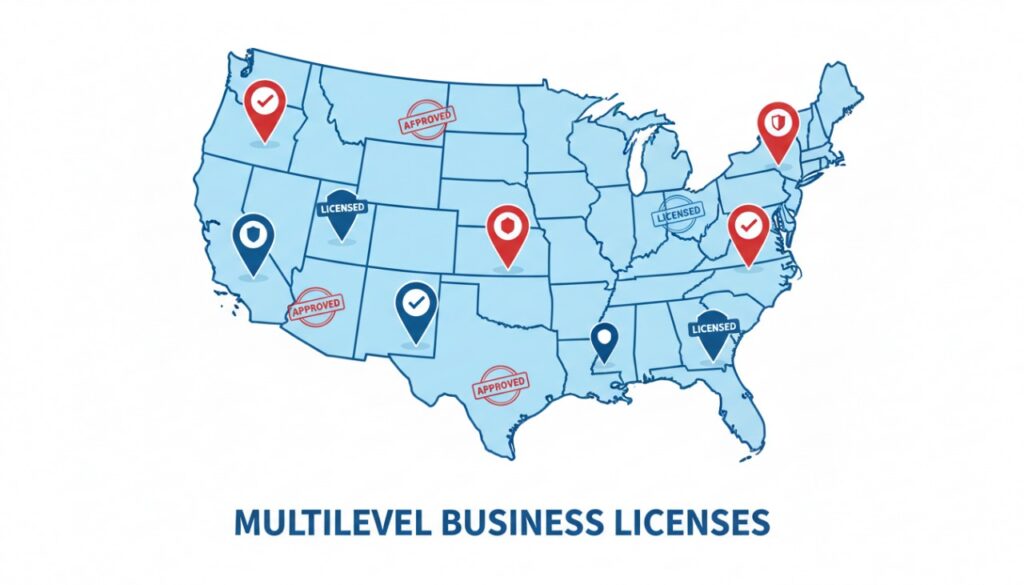
Common Business Licenses for Entrepreneurs and Small Businesses
While the exact list depends on the state and city, these are among the most common:
a) Business License or General Business License
The basic license that authorizes your company to operate in a city or county.
It is often required even for home-based businesses.
b) Sales Tax Permit
If you sell products or certain taxable services, you must register with the state authority to:
- Collect sales tax from customers
- File and remit it periodically
c) Activity-Specific Licenses
Examples include:
- Restaurants and food: health permits, food handling licenses, health department approvals
- Construction: contractor licenses, building permits, workplace safety requirements
- Beauty and personal care: cosmetology, barber, spa licenses
- Transportation and logistics: permits to operate fleets, special transport, or freight services
d) Home Occupation Permit
If you work from home, some cities require a specific permit to operate a business there—especially if you receive clients or merchandise.
Online Businesses and “No-Office” Companies: Do They Also Need Licenses?
Yes.
Even if your business is 100% digital and you sell from Latin America to U.S. customers, you may still need:
- Registration of your legal entity (LLC, Corp, etc.) in a specific state
- A general business license in the city where the company is registered
- Permits related to digital sales and sales tax collection, depending on volume and the states where you have economic nexus
Many entrepreneurs believe that being online keeps them “off the radar.”
The reality is that more and more states are monitoring digital sales and enforcing compliance.
How Business Licenses Connect with Corporate Insurance
Licenses and insurance go hand in hand:
- Some licenses require proof that your company carries specific policies, such as:
- General liability insurance
- Workers’ compensation insurance
- Professional liability (E&O)
- Industry-specific coverage
- Insurers, in turn, may deny coverage if they discover you are operating without valid licenses or permits.
That’s why at Ubox we treat corporate insurance and business licenses as a single front—so what you sign in an insurance policy aligns with what you report to authorities.
Basic Steps to Determine Which Licenses You Need
While every case is different, a practical approach includes:
Clearly define your activity
- What do you sell?
- To whom?
- From where and to where?
Identify your legal structure
- Individual, LLC, or Corporation?
- In which state is it registered?
Review federal, state, and local requirements
- Use official databases, but more importantly,
- Rely on a team that understands each state’s specific rules
Check for special conditions
If you handle food, healthcare, children, transportation, chemicals, alcohol, etc., regulations are always stricter.
Create a license and permit map
- What you need today
- What you’ll need if you open a new location, expand to another state, or launch a new business line
Risks of Operating Without a License (Even If “Nothing Has Happened Yet”)
You may have been selling for months or years without the proper license and “nothing happened.”
The problem is that when it does happen, it usually looks like this:
- Accumulated fines for each day or month of unauthorized operation
- Temporary closure or suspension of activities
- Difficulty renewing insurance policies or opening new bank accounts
- Problems selling your company or seeking investment (failed due diligence)
Operating with the correct licenses is not a useless cost—it’s an investment in stability and scalability.
How Ubox Handles Business Licenses
At Ubox, we help entrepreneurs and companies navigate the U.S. regulatory maze through our Corporate Insurance and Business Licensing service:
- We analyze your business model and legal structure
- We identify the required licenses and permits based on your state, city, and activity
- We manage the application process with the relevant authorities
- We align your licenses with the appropriate insurance policies for your real risk exposure
- We create a renewal and expiration calendar so you never miss a deadline again
All 100% online, with a bilingual team that understands both the legal framework and the operational reality of Latin American entrepreneurs and SMEs in the U.S.
Schedule a Consultation to Review Your Licenses and Permits
Every business is different: what applies to a restaurant in Miami is not the same as for an online store in Texas or an aesthetic clinic in New York.
That’s why the smartest step is to review your specific situation:
- See which licenses you already have and which are missing
- Assess your current risk of penalties or shutdowns
- Design a plan to regularize and update your licenses and insurance
Schedule a consultation to review your licenses and permits and make sure your company operates legally in the U.S., with the peace of mind of being protected by an integrated corporate insurance and business licensing program.